Before the page was opened
I read the professional letter before I read the post that triggered it. That order matters. Emergency medicine begins before anyone has a complete story. A physician sees a patient whose history is partial, whose pain is immediate, and whose danger may be hidden in a vital sign or a glance at a scan. The job is not to decide whether the patient is morally deserving. It is to stabilize, diagnose, treat, and hand the patient to the next part of the system.
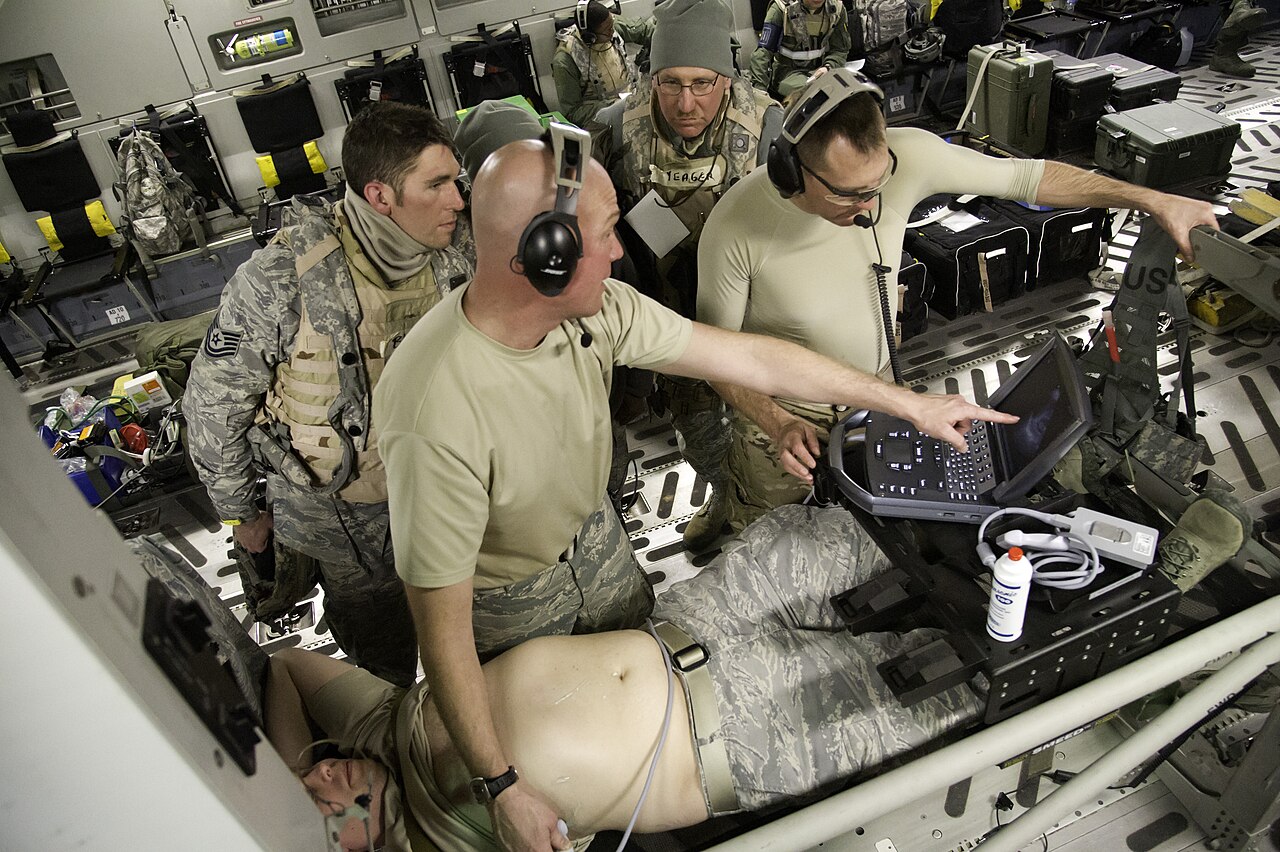
Sam Sheikali trained for that work. Morehouse School of Medicine’s 2019 alumni publication described him as an emergency medicine resident at Emory and reported that he donated his first month’s salary back to Morehouse. He credited the school with admitting him when other schools had not. Emory lists him among its 2022 emergency medicine graduates. His curriculum vitae records clinical work and a 2024 medical mission to Lebanon, where he provided care for injured and displaced people and taught trauma, mass-casualty, and ultrasound skills.
The roots of that vocation reach back to his adolescence. Morehouse’s profile says that when Sheikali was 15, he was in southern Lebanon with his family, listening to missiles strike nearby towns. He later described that experience as part of the reason he wanted to become a physician. The biography is not decoration. It explains why a doctor who could have limited his public life to the emergency department chose to speak about civilian harm beyond it.
A physician’s second shift
In 2024, Sheikali traveled to Lebanon with a medical team. The account he gave CBS News Chicago describes mass-casualty care, training for local clinicians, and a brief reunion with his grandmother, whose family had been displaced from southern Lebanon. He said he had tried to volunteer in Gaza and accepted the opportunity in Lebanon when it arose.
That work did not make his political views correct by professional authority. It did make the later public image of him as a remote online agitator incomplete. His statements were connected to a medical practice shaped by war, displacement, and the obligations of emergency care. He saw the politics of Israel, Gaza, and Lebanon through a family history and through encounters with injured civilians. Other people may reject his conclusions. The record does not permit us to pretend they came from nowhere.
The messages reached the hospital
In March 2025, StopAntisemitism published a post naming Sheikali, displaying his photograph and social-media handle, identifying his hospital employer, and directing readers to contact the hospital’s media-relations office. The group called his speech an example of “cancerous antisemitism.” Sheikali told CBS that posts had been selected without context and that callers and emailers began contacting his workplace and its human-resources department.
He learned about the post from his wife, after his phone began filling with hateful messages. He told CBS that he was angry at the attempt to damage his career and worried about his family’s safety. The report independently verified a post in a private emergency-medicine Facebook group that called him a “jihadist” and asked whether he felt the walls closing in on his career.
The campaign’s evidence consisted principally of Sheikali’s public posts and the interpretation attached to them. Those posts included severe criticism of Israel and Zionism and statements about the war in Gaza. It is legitimate to examine whether a doctor’s public speech is discriminatory, threatening, or incompatible with patient care. The public material described by CBS does not establish that Sheikali mistreated a patient, denied care, discriminated in clinical practice, or violated a hospital policy in the emergency department.
The internal review
OSF Healthcare told CBS that it followed its internal protocols in reviewing the matter and directed further comment to Sheikali. Sheikali said a director informed him that the investigation had concluded and that he remained in good standing. That is the central institutional fact. The hospital was contacted by an outside campaign, reviewed the issue, and did not announce discipline.
The result did not make the campaign harmless. A professional inquiry can impose a cost even when it ends without a sanction. The doctor must explain personal speech to an employer. Colleagues receive a dossier assembled by people outside the workplace. The institution must spend time determining whether an online accusation belongs inside a clinical credentialing process. Exoneration inside a process does not erase the burden of having been placed in it.
The record also does not show that the hospital agreed with Sheikali’s politics. It shows a limited finding about his standing under the hospital’s process. That boundary matters. Institutional review can clear a professional of a policy violation without endorsing every statement he has made.
The letter from the specialty board
The next pressure point was not the hospital. In May 2025, Sheikali received a letter from the American Board of Emergency Medicine warning that his certification could be revoked because of his social-media posts. CBS reported that the letter described the posts as “extremely anti-Zionist” and said they portrayed Israel as unacceptably evil.
The board’s correspondence raised a question different from the hospital’s. An emergency physician’s certification is tied to competence, ethics, and public trust. A board can investigate professional misconduct. The question in Sheikali’s case was whether political speech about a foreign state and an ongoing war belonged in that disciplinary frame, absent evidence of clinical misconduct or a direct threat.
ABEM later told Sheikali it would not take further proceedings and would impose no specific restrictions on his personal speech. ABEM told CBS that it does not comment on individual physicians or disclose communications about them. The available record therefore contains Sheikali’s account of the letters and the final language reported by CBS, but not the board’s complete investigative file or a public explanation of its initial concern.
That missing file limits the story. It would be improper to say that ABEM acted unlawfully or that its first letter was baseless. It is fair to say that the process created a professional risk over speech that, in the public record, concerned political views rather than patient treatment. The board’s decision to end the matter is stronger evidence about the outcome than the original warning is about the truth of the accusation.
Duty, disagreement, and punishment
Sheikali’s case resists two easy conclusions. One would treat any criticism of Israel as protected by definition and dismiss the possibility that his language could trouble Jewish patients or colleagues. The other would treat hostility toward Zionism as proof that he is antisemitic and then treat antisemitism as proof that he is professionally unsafe. Neither conclusion is established by the record.
His public statements may be criticized on their substance, tone, historical comparisons, or use of language. If a hospital believes a physician has crossed a professional line, it can apply a neutral process. What the record shows is a different route: a campaign publicized a label, directed attention to the workplace, generated calls, and then the profession’s institutions had to decide whether political punishment had entered through the side door of credentialing.
The distinction between medical ethics and public discipline is especially important in emergency medicine. A physician’s obligation to treat does not depend on agreement with a patient’s politics. Nor does a doctor’s medical license make every political statement wise. The relevant question is whether an institution can identify a concrete professional harm and apply its rules consistently. Public outrage supplies pressure. It does not supply that finding.
What the record establishes: medicine, review, restraint
Sam Sheikali is an emergency physician trained at Morehouse and Emory. His early life included exposure to war in Lebanon. He donated his first month’s salary to Morehouse, completed emergency-medicine residency, and participated in a Lebanon medical mission that included care for the injured and clinical teaching.
In 2025, StopAntisemitism published his identity, employer, and political posts while urging contact with his workplace. He reported threats, family-safety concerns, and mass contact with hospital personnel. OSF reviewed the matter and, according to Sheikali’s account, found him in good standing. ABEM warned that certification could be revoked, then ended the proceedings and imposed no speech restrictions, according to the reporting available here.
No cited source reports patient discrimination, patient harm, or a clinical-ethics violation by Sheikali. That silence cannot turn every objection to his posts into a fabrication. The narrower conclusion is the defensible one: political speech became a professional-risk file, while the institutions involved ultimately announced neither a clinical sanction nor a credentialing penalty.
What remains open
ABEM’s complete letters and investigative reasoning are not public. OSF has not described its review beyond its brief statement. Sheikali’s later lawsuit, filed against individuals and Physicians Against Antisemitism, remains a separate legal process, and the docket alone cannot establish liability. The effect of the campaign on his future appointments, colleagues, and patients is difficult to measure.
The public file leaves Sheikali as a physician whose political speech entered a professional process, not as a case with a published finding of clinical harm. His training, emergency work, and medical service in Lebanon remain relevant because they describe the duties he actually undertook. The board’s warning, the hospital review, and the absence of a public sanction belong in the same account. None can stand in for the others.
Documents consulted
- CBS News Chicago, “CAIR-Chicago files class action lawsuit against StopAntisemitism, Canary Mission.”
- Morehouse School of Medicine, “Paying it Forward, with a Purpose,” Primarily Caring, Fall 2019.
- Emory University School of Medicine, Emergency Medicine Class of 2022.
- Sam Sheikali, curriculum vitae, public copy.
- Sheikali v. Korinow et al., N.D. Ill. docket 1:2026cv04615.
Limits of this account
This essay does not endorse every public statement attributed to Sheikali. It separates public criticism, organizational allegations, institutional review, and reported outcomes. The absence of a public finding of clinical misconduct is not proof that all disputed speech was harmless. It is a limit on what can responsibly be claimed.