Prosecutorial discretion had consequences
OPR found that the federal prosecutors’ resolution did not amount to professional misconduct under its standard. It also found poor judgment and deficient treatment of victims. [1] [2] The public record therefore documents an institutional failure without requiring an invented criminal explanation.
The later victims’ rights litigation shows how procedure constrained the remedy. [3] The statute states meaningful rights, while the en banc decision addressed when and how those rights could be enforced in the absence of a pending federal prosecution. [10]
Detention oversight documented serious failures
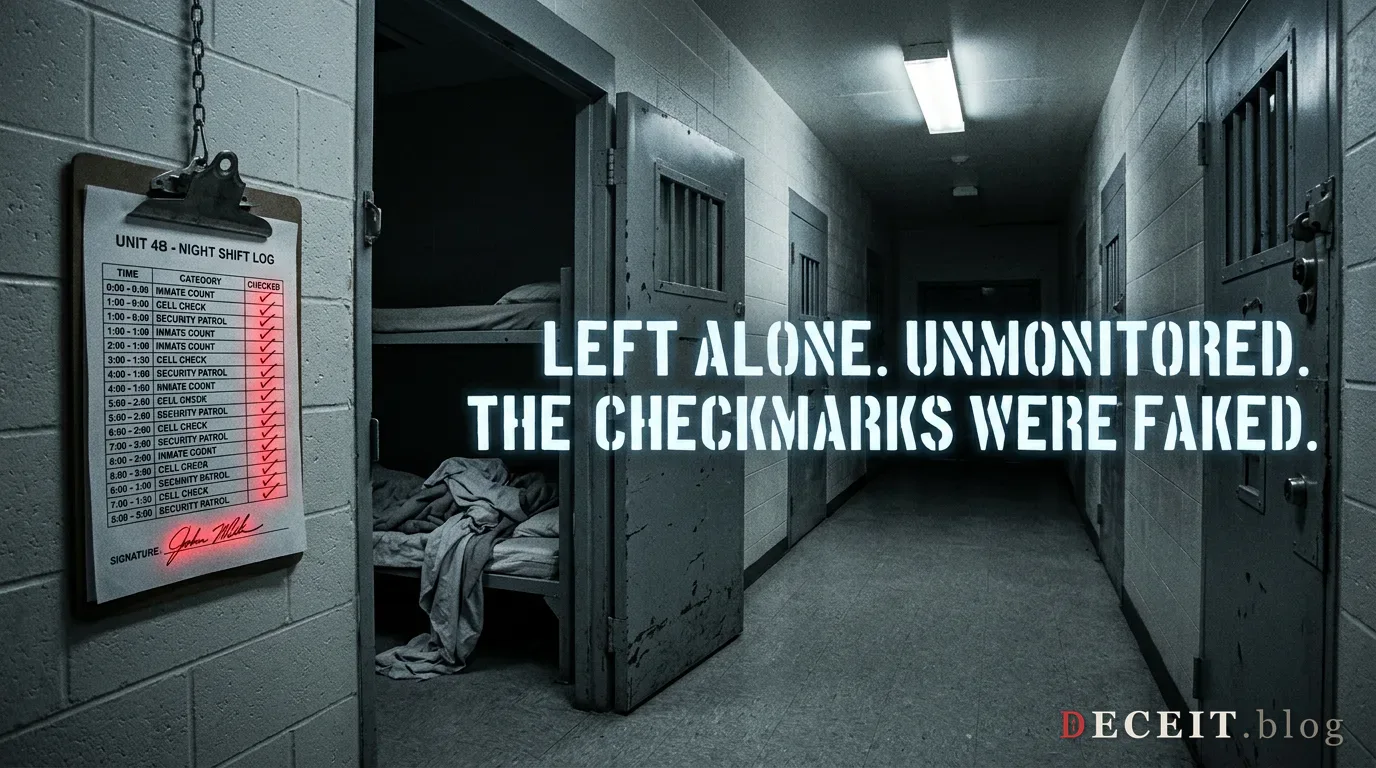
The DOJ Inspector General found numerous and serious failures by Metropolitan Correctional Center staff. The report describes Epstein being left unmonitored and alone with excessive bed linens for hours before he was found dead. It made eight recommendations, which the Bureau of Prisons accepted. [8]
Separately, federal prosecutors charged two correctional officers with falsifying records related to required checks. That announcement described allegations and must be read as a charging document, not as a final finding. [12]
Failure is evidence of failure
Institutional breakdown can be consequential without proving every theory later attached to it. The OIG report is evidence for staffing, supervision, monitoring, and policy failures it actually documents. It is not evidence for propositions it did not investigate or find.
A factual archive preserves that limit. It records what failed, who reviewed it, what standard was applied, and whether the result was an allegation, finding, recommendation, or adjudication.