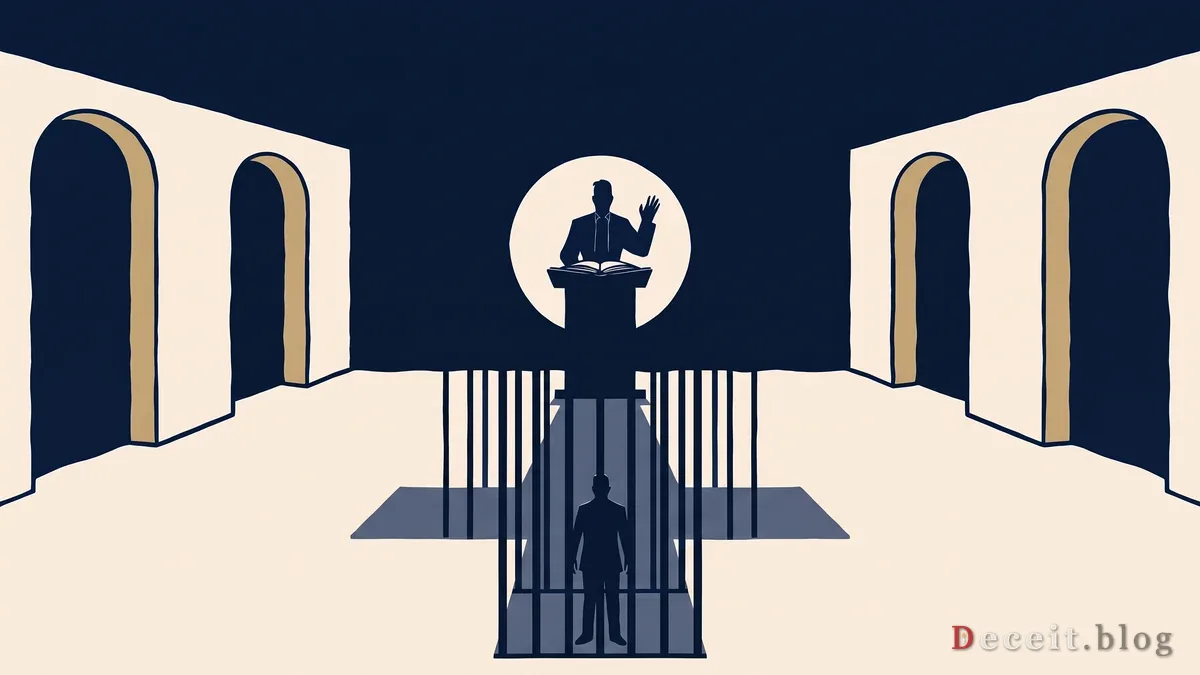
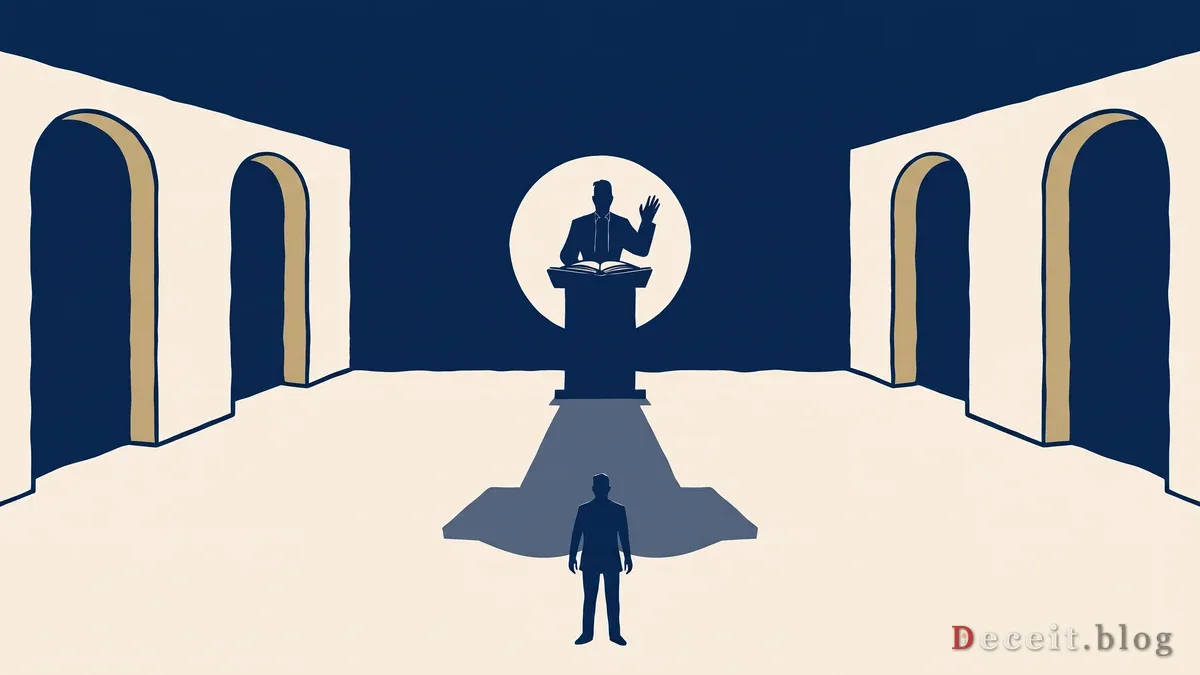
In one account reviewed by Victoria Pagan, a perpetrator quoted scripture to a child, told her that God wanted them to spend time together, and stressed that she should obey and respect her elders. Pagan’s 2026 analysis draws on evidence submitted to the Independent Inquiry into Child Sexual Abuse in England and Wales. It documents divine authority brought inside abuse. (Pagan’s analysis)
In 1985, theologian Jim M. Alsdurf reported results from a questionnaire mailed to 5,700 Protestant pastors in the United States and Canada. Of the pastors who replied, 26 percent endorsed the view that a wife abused by her husband should submit and trust God to stop the violence or give her strength to endure it. Twenty-one percent said no amount of abuse justified separation. Respondents were 99 percent men. The response rate was low and respondents self-selected, so the figures describe those who replied. They cannot tell us what pastors believe today. Those answers put the burden on the wife: submit, endure, or accept that abuse does not justify separation. (Alsdurf’s study)
A man who claims to speak for God can make his own instruction sound divine, then cast resistance as disobedience to God. When the instruction is to submit, forgive, or keep quiet, the person harmed is left carrying the moral burden and the man’s conduct recedes from view.
What the records can show
None of the sources here counts how often someone invokes God to justify abuse. The Australian and French studies estimate abuse in religious settings. The inquiries and survivor accounts document specific uses of religious authority and institutional responses.
The nationally representative Australian Child Maltreatment Study surveyed 8,503 Australians aged 16 and older. One in 250 reported being sexually abused as a child by an adult in a religious organization. The researchers estimated that 87,000 Australian adults had experienced this abuse, with a confidence interval of 50,000 to 123,000. Perpetrators were overwhelmingly male; 71.9 percent of respondents who reported this abuse identified a Catholic organization. (Hunt et al.)
In France, an independent commission estimated 216,000 people had been sexually abused as children by Catholic clergy or members of religious orders between 1950 and 2020. Including lay people working in or connected to Catholic institutions raised the estimate to 330,000. These are population-survey estimates, not counts of court convictions. The figures establish abuse in religious settings. They cannot tell us how often God was invoked or whether faith caused the abuse. (CIASE final report)
When authority is used to silence
The cases below come from Christian institutions in England and Wales, France, and Australia. They show specific uses of religious authority, not how common the same conduct is across faiths.
Pagan’s analysis also records accounts of prayer after abuse, victims told the abuse was God’s will, and senior figures invoking scripture when explaining why they could not speak to police. These examples show religious language shaping what happened after abuse and whether it could be reported. (Pagan’s analysis)
The Australian Royal Commission heard from 4,029 survivors about abuse in religious institutions. Its case studies documented failures to report abuse, transfers of alleged perpetrators to other institutions, minimization of allegations, and cases where institutional interests were placed ahead of survivors. In examining Catholic canon law, the Commission found that treating abuse as a forgivable moral failing rather than a crime had obstructed discipline and reporting. (Royal Commission findings)
AP reported that a survivor-run website, hotline, and social media effort had documented allegations against more than 900 people in the Two by Twos, a Christian sect, across 30 countries. AP also interviewed survivors and reviewed court documents, correspondence, and other records. Survivors told AP that abusive preachers were moved to new families and that forgiveness language helped keep allegations quiet. In one letter, a regional overseer advised an elder accused of child molestation to seek counseling so, he claimed, the sect would not have to report the crime. AP’s reporting documents allegations and institutional conduct; it cannot estimate prevalence. (AP investigation)
The details differ. The danger is the same when a sacred claim is used to shut down questions about what happened or whether anyone is safe.
When the claim becomes law
Power does not stay in the sanctuary. In Dobbs, the Christian Medical & Dental Associations asked the Supreme Court to uphold Mississippi’s 15-week abortion ban. Its brief grounded the group’s argument in the belief that humans are made in God’s image. A brief from 45 faith-based organizations on the other side included Christian groups such as Presbyterians Affirming Reproductive Options and African American Ministers in Action. Christian faith has no single political voice. Here, the issue is not a pastor telling one person what God commands. It is an organized religious group asking the state to enforce its reading for everyone. (Christian Medical & Dental Associations’ brief; opposing faith-based brief)
Texas gives us a name: Josseli Barnica. She was in the middle of a miscarriage when doctors delayed treatment. She died of sepsis in 2021, days after the state’s six-week ban took effect. ProPublica reviewed her hospital and autopsy records; more than a dozen medical specialists told the outlet that the delay violated medical standards. Her husband told ProPublica that she said the medical team had told her they had to wait until there was no heartbeat because it would be a crime to intervene. This account shows the practical stakes of the law; it does not establish a statewide death toll or prove a doctor’s religious motive. A 2026 study of national data through 2023 found no statistically significant overall rise in pregnancy-associated deaths in ban states. Its authors said the follow-up was short and estimates imprecise. (ProPublica’s investigation; 2026 mortality study)
There is a cost that doesn’t show up in a hospital death count. The Turnaway Study compared people who sought abortions just above and below clinic gestational limits. Those denied care experienced financial distress that stayed elevated for years, including more past-due debt and public records such as evictions and bankruptcies. The study cannot tell us why each lawmaker voted for a ban. It can tell us what happened to people who sought an abortion and could not get one. (Miller, Wherry, and Foster)
The safety net is another part of the argument. Sociologist Sarah Shannon calls one political model “religious neoliberalism”: conservative Christian ideals of congregational charity joined to a preference for less government aid. Her study of state General Assistance programs from 1970 to 2010 found that higher church density was associated with a greater likelihood that a state would end its program. General Assistance could provide cash and other aid to very poor adults. This is a state-level association, not proof that one church or preacher caused a particular closure. It does show the consequence of treating charity as a substitute for public support: people can lose help they relied on and have no guarantee another source will be there. (Shannon’s study)
The FLDS marriage case is different again, and the religious claim is explicit. The Utah Supreme Court’s account describes 14-year-old Elissa Wall objecting first to being married so young, then to marrying her 19-year-old cousin. FLDS doctrine held that God revealed marriage partners to the prophet. The court reversed Jeffs’s Utah conviction because of flawed jury instructions, so that verdict did not stand. In a separate Texas case, a jury convicted him of sexual assault of a child and aggravated sexual assault of a child. This is evidence about one small sect, not Christianity at large. (Utah Supreme Court opinion; Texas appellate record)
These are different settings, not proof that faith itself causes harm. The shared warning is a claim of sacred authority used to close the discussion of who decided, who was harmed, and who may investigate. Deceit calls one part the Arguer’s Fallacy: the man treats his own authority as proof he has interpreted God correctly. Duty weaponization names the next turn, when submission, forgiveness, or staying becomes the harmed person’s obligation.
Christian scripture also gives believers language for challenging domination. In Mark 10:42–45, Jesus contrasts rulers who “lord it over” others with service. Traditions interpret scripture differently, but a man cannot settle a dispute about his conduct by declaring himself God’s representative. His actions and the harm remain open to examination.
A test that returns responsibility
When a man says God authorizes his conduct, keep the questions concrete:
- What did he do? Name the conduct before weighing his intentions, title, or repentance.
- What does he say God requires? Separate the scripture, the tradition’s interpretation, his own inference, and a private revelation.
- Who benefits from that interpretation? Notice who gains control and who is expected to absorb the danger or keep quiet.
- Who outside his circle can investigate? For abuse or a crime, pastoral counseling cannot replace safety, independent investigation, or required reporting.
- What changed after the harm was named? Look for protection from further access, consequences, and repair. An apology does not show that people are safe.
You do not have to settle theology to question a man’s claim to speak for God.
If this is happening to you, you do not have to confront him or prove his theology before seeking help. If you can, speak with someone outside his circle whom you trust and make a safety plan with a specialist. In the United States, the National Domestic Violence Hotline offers support by phone, chat, or text. If a child may be at risk, Childhelp’s National Child Abuse Hotline offers support by call, text, or chat. Contact local emergency services if anyone is in immediate danger. Choose the route that is safest for your circumstances.
A claim about God does not change who caused the harm. Ask who he can still reach, and who can keep that person safe.
Sources
- Jim M. Alsdurf, “Wife Abuse and the Church: The Response of Pastors”, Response (Winter 1985), 8–11.
- Gabrielle R. Hunt et al., “The Prevalence of Child Sexual Abuse Perpetrated by Leaders or Other Adults in Religious Organizations in Australia”, Child Abuse & Neglect 155 (2024), 106946.
- Independent Commission on Sexual Abuse in the Catholic Church, Final Report (France, 2021).
- Australian Royal Commission, Religious Institutions.
- Associated Press, “Takeaways from AP’s Reporting on a Child Sex Abuse Crisis Inside a Secretive Christian Sect” (2024).
- Victoria Pagan, “Violence and Value: Religious Organisations and Child Sexual Abuse”, Human Relations (2026).
- Christian Medical & Dental Associations’ amicus brief in Dobbs v. Jackson Women’s Health Organization (2021).
- Faith-based amici brief in Dobbs v. Jackson Women’s Health Organization (2021).
- Cassandra Jaramillo and Kavitha Surana, “A Woman Died After Being Told It Would Be a ‘Crime’ to Intervene in Her Miscarriage at a Texas Hospital”, ProPublica (2024).
- Hiluf Ebuy Abraha et al., “US Abortion Bans and Pregnancy-Associated Mortality”, JAMA Network Open 9, no. 4 (2026).
- Sarah Miller, Laura R. Wherry, and Diana Greene Foster, “The Economic Consequences of Being Denied an Abortion”, American Economic Journal: Economic Policy 15, no. 1 (2023).
- Sarah K. S. Shannon, “Punishment, Religion, and the Shrinking Welfare State for the Very Poor in the United States, 1970–2010”, Socius 3 (2017).
- State v. Jeffs, 2010 UT 49, Utah Supreme Court.
- Jeffs v. State, No. 03-11-00568-CR, Texas Court of Appeals (2012).
- Mark 10:42–45, NRSVUE.
- The National Domestic Violence Hotline: Get Help.
- Childhelp: National Child Abuse Hotline.